
React JS
Enroll in our React JS training course to master front-end development with React. Learn from experts, build dynamic web applications, and advance your career in web development.
React JS
Learning React JS is essential for IT placements due to its pivotal role in modern web development. Developed by Facebook, React JS is a powerful JavaScript library for building dynamic user interfaces with a component-based approach that promotes reusability and maintainability.
| Duration | 4 Weeks | Class Hours | 1 hour/day |
| Lab Hours | 1 hour/day | Prerequisite | Basic knowledge of programming |
| Certificate | After successful completion of training | Trainer | Industry Experienced Mentor |
| Study Material | Books, Notes and Online Tests | Online Test | Unlimited |
| Project | No | Lectures In | English / Hinglish / Hindi |
| Fees | ₹ 6,000/- + 18% GST | Placement Support | No |
| Complimentary | T-Shirt | ||
About React JS
Proficiency in React JS allows candidates to create efficient, interactive web applications through its virtual DOM and one-way data flow, which optimize performance and ensure seamless user experiences. React’s ecosystem, including tools like Redux, React Router, and Material-UI, enhances development productivity. Its versatility also extends to mobile app development via React Native, making React JS a highly desirable skill for IT placements in companies focused on cutting-edge technology and digital innovation.
Following Key Topics to Cover in React JS-
12 Modules · 4 Weeks
-
- What is React JS?
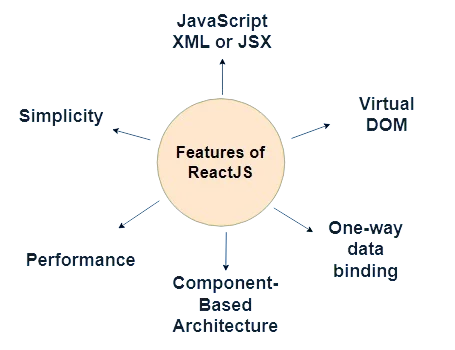
- Key Features of React JS
- Virtual DOM
- React Components
-
- Creating a React App
- React Development Tools
- Project Structure
- Understanding npm and yarn
-
- Functional Components
- Class Components
- State and Props
- Component Lifecycle
- Handling Events
-
- Introduction to JSX
- Embedding Expressions
- JSX Attributes
- JSX and HTML Differences
-
- Introduction to Hooks
- useState Hook
- useEffect Hook
- Custom Hooks
-
- Introduction to React Router
- Setting Up Routes
- Navigating Between Routes
- Route Parameters
- Route Guards
-
- Local State vs. Global State
- State Management Libraries (Redux, Context API)
- Using Redux for State Management
- Async Actions with Redux Thunk
-
- Controlled Components
- Uncontrolled Components
- Form Validation
- Formik Library
-
- Inline Styles
- CSS Modules
- Styled Components
- Third-Party Libraries for Styling
-
- Identifying Performance Issues
- React.memo
- Optimizing Re-renders
- Code Splitting
-
- Introduction to Testing
- Unit Testing with Jest
- Integration Testing with React Testing Library
- End-to-End Testing with Cypress
-
- Production Builds
- Deployment Strategies
- CI/CD Integration
- Performance Optimization
Mastering React JS is essential for building modern, interactive, and scalable web applications. This curriculum covers the fundamental topics needed to become proficient in React development. By understanding these concepts, you can create dynamic user interfaces and build robust web applications. Best of luck with your learning journey!
Why Should a Student or Professional Learn React JS?
- Component-Based Architecture: React JS promotes a modular approach to building web applications, making code reusable and easier to manage.
- High Demand: React JS is one of the most popular JavaScript libraries, with a high demand for developers skilled in React across many industries.
- Rich Ecosystem: React has a robust ecosystem, including tools like Redux for state management, and a vast library of third-party components.
- Performance: React's virtual DOM efficiently updates and renders components, leading to high-performance applications.
- Community Support: React has a large and active community that provides extensive documentation, tutorials, and support.
- Versatility: React can be used for web development as well as mobile app development with React Native, broadening its applicability.
By learning React JS, students and professionals can develop highly interactive and dynamic web applications, enhancing their skills and career opportunities in the tech industry.
Interesting Facts
React JS is a widely-used JavaScript library for building user interfaces, particularly for single-page applications. Here are some interesting facts about React JS:
1. History and Development
Origin
React JS was developed by Jordan Walke, a software engineer at Facebook. It was first deployed on Facebook's newsfeed in 2011 and later on Instagram in 2012.
Open Source
React was open-sourced at the JSConf US in May 2013. Since then, it has gained immense popularity and a large community of contributors.
Maintained by Facebook
React is maintained by Facebook, along with a community of individual developers and companies. It is one of the reasons for its robust support and rapid evolution.
2. Language Features
Component-Based Architecture
React JS promotes building UIs using components, which are reusable pieces of code that represent parts of the interface. This makes development more modular and maintainable.
JSX
React uses JSX (JavaScript XML), a syntax extension that allows writing HTML-like code within JavaScript. This makes the code more readable and easier to understand.
Virtual DOM
One of React's key features is the Virtual DOM, which improves performance by minimizing direct manipulation of the actual DOM. It updates only the parts of the DOM that have changed, making updates more efficient.
One-Way Data Binding
React uses one-way data binding, meaning data flows in one direction from parent to child components. This makes the data flow easier to understand and debug.
3. Performance and Usage
High Performance
React's Virtual DOM and efficient rendering process contribute to high performance, especially for complex and dynamic applications.
React Native
React JS paved the way for React Native, a framework for building mobile applications using the same principles and components as React JS. This allows for sharing code between web and mobile applications.
Large Ecosystem
React has a rich ecosystem of libraries and tools, such as Redux for state management, React Router for routing, and many UI component libraries like Material-UI and Ant Design.
4. Applications and Industry Impact
Wide Adoption
React is used by many large companies and organizations, including Facebook, Instagram, Airbnb, Netflix, WhatsApp, and Uber, among others.
Community and Support
React has a large and active community, with numerous conferences (like React Conf), meetups, tutorials, and online forums.
5. Unique Aspects
Declarative Programming
React promotes a declarative programming style, where developers describe what the UI should look like for a given state, and React takes care of updating the UI to match that state.
Hooks
Introduced in React 16.8, hooks are functions that let developers use state and other React features without writing a class. Hooks have simplified the way React components are written and managed.
React Fiber
React Fiber is a complete rewrite of the React core algorithm, introduced in React 16. It improves the ability to handle animations, layout, and gestures, making React more efficient and capable.
6. Fun Facts
Backward Compatibility
React has maintained strong backward compatibility, ensuring that applications built with older versions of React can be easily upgraded to newer versions without significant changes.
Declarative Syntax
JSX might look like HTML, but it’s actually JavaScript. This combination allows for a powerful and expressive syntax to build complex UIs.
Unidirectional Data Flow
React's unidirectional data flow simplifies debugging and makes the application state more predictable.
Fiber Architecture
React Fiber, the new reconciliation algorithm introduced in React 16, allows React to break down rendering work into chunks, making updates more responsive and improving the user experience.
Component Ecosystem
The React ecosystem includes a vast array of third-party components, tools, and extensions that can be easily integrated to extend functionality and streamline development.
Learning Curve
While React itself is relatively straightforward to learn, mastering the entire ecosystem (including tools like Webpack, Babel, and state management libraries) can be more challenging.
Training Program Fee
Get Personalized Career Guidance
Our admissions team specializes in helping students choose the right career path for their goals.