
Spring Framework
Spring Framework
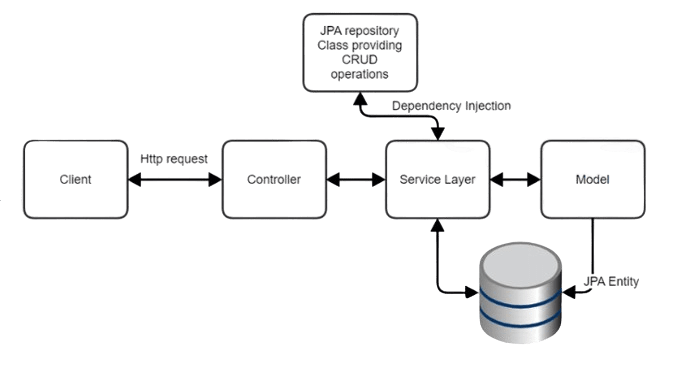
The Spring Framework is a comprehensive framework for enterprise Java development. It provides a robust infrastructure for developing Java applications, offering features like dependency injection, aspect-oriented programming, and transaction management. These features promote loose coupling and easier testability, enhancing the overall maintainability of applications. Spring's core container simplifies the creation and management of application components, making development more efficient.
| Duration | 8 Weeks | Class Hours | 1 hour/day |
| Lab Hours | 1 hour/day | Prerequisite | Knowledge of Core Java |
| Certificate | After successful completion of training | Trainer | Industry Experienced Mentor |
| Study Material | Books, Notes and Online Tests | Online Test | Unlimited |
| Project | Yes | Lectures In | English / Hinglish / Hindi |
| Fees | ₹ 25,000/- + 18% GST | Placement Support | No |
| Complimentary | Laptop Bag and T-Shirt | ||
About Spring Framework
In addition to its core functionality, Spring integrates seamlessly with various technologies and frameworks such as Hibernate, JPA, and JMS. It supports building web applications through Spring MVC, and microservices via Spring Boot, which simplifies application setup with its convention-over-configuration approach. Spring's versatility and extensive ecosystem make it a popular choice for developers seeking to build scalable, high-performance applications.
Key Features of Spring Framework:
Dependency Injection
Spring's IoC container facilitates loose coupling by injecting dependencies into objects at runtime.
Aspect-Oriented Programming (AOP)
Spring AOP enables cross-cutting concerns such as logging, security, and transaction management to be modularized and applied to multiple parts of an application.
Spring MVC
It provides a robust framework for building web applications based on the Model-View-Controller architecture, offering features like request mapping, data binding, and validation.
Transaction Management
Spring simplifies transaction management by providing declarative transaction support, allowing developers to focus on business logic rather than boilerplate code.
Integration
Spring integrates seamlessly with other frameworks and technologies such as Hibernate, JPA, and JDBC, enhancing application development and productivity.
Complete Spring Framework Syllabus
10 Modules · 8 Weeks
The syllabus for Spring Framework covers a wide range of topics essential for understanding and effectively using Spring to develop enterprise applications.
-
- Overview of Spring Architecture
- Dependency Injection (DI) and Inversion of Control (IoC)
- Bean Lifecycle and Scope
- Configuration with XML and Annotations
-
- Spring Beans and ApplicationContext
- Bean Autowiring and Qualifiers
- Profiles and Environment
- Bean Post Processors and Factory Beans
-
- Understanding AOP Concepts
- Creating Aspects and Advices
- Pointcuts and Joinpoints
- AspectJ Integration
-
- Introduction to Spring MVC Architecture
- Controller Layer: @Controller and @RequestMapping
- View Layer: ViewResolver and JSP Integration
- Model Layer: @ModelAttribute and Data Binding
-
- Integration with JDBC
- Spring Data and Repository Pattern
- ORM Integration with Hibernate and JPA
- Transaction Management with Spring
-
- Introduction to Spring Security
- Authentication and Authorization
- Securing Web Applications
- Custom Authentication Providers
-
- Introduction to Spring Boot
- Auto-Configuration and Starter Dependencies
- Spring Boot CLI and Actuator
- Deploying Spring Boot Applications
-
- Unit Testing with JUnit and Mockito
- Integration Testing with Spring TestContext
- Testing Spring MVC Controllers
- Mocking Dependencies and Web Components
-
- Introduction to Spring Cloud
- Service Registration and Discovery
- Client-Side Load Balancing
- Distributed Configuration Management
-
- Summary of Spring Framework Concepts
- Best Practices for Spring Development
- Resources for Further Learning
This syllabus provides a comprehensive foundation in the Spring Framework, enabling developers to leverage its features and build robust, scalable, and maintainable enterprise applications.
Why Should a Student or Professional Learn Spring Framework?
- Industry Demand: Spring skills are highly valued in the job market, with many organizations using Spring for building robust and scalable enterprise applications.
- Modular and Lightweight: Spring's modular architecture and lightweight design make it easy to integrate with existing applications and scale as needed.
- Productivity: Spring reduces boilerplate code and provides features like dependency injection and aspect-oriented programming, leading to faster development and fewer errors.
- Community Support: Spring has a large and active community of developers, providing extensive documentation, tutorials, and support resources.
- Integration: Spring integrates seamlessly with other frameworks and technologies such as Hibernate, JPA, and JDBC, enhancing application development and productivity.
By learning the Spring Framework, students and professionals can enhance their development skills and build enterprise-grade applications that meet industry standards for performance, scalability, and maintainability.
Interesting Facts
The Spring Framework is a comprehensive framework for enterprise Java development. It provides a wide range of features and capabilities to simplify the development of robust and scalable applications. Here are some interesting facts about the Spring Framework:
1. Created and Development
Origin
The Spring Framework was created by Rod Johnson and was first released in 2003. It was developed to address the complexities and limitations of traditional Java Enterprise Edition (J2EE) development, providing a more modular and flexible approach.
2. Inversion of Control (IoC)
Core Principle
Spring is known for its Inversion of Control (IoC) container, which promotes loose coupling between application components. By using dependency injection, Spring manages the creation and wiring of objects, simplifying configuration and promoting testability.
3. Aspect-Oriented Programming (AOP)
Separation of Concerns
Spring supports Aspect-Oriented Programming (AOP), allowing developers to separate cross-cutting concerns like logging, security, and transaction management from business logic. This leads to cleaner and more maintainable code.
4. Comprehensive Data Access
Data Integration
Spring provides robust support for data access through its JDBC and ORM (Object-Relational Mapping) modules. It simplifies database interaction by reducing boilerplate code and offering consistent error handling and transaction management.
5. Modular Architecture
Flexible Design
The Spring Framework is modular, meaning developers can use only the parts they need. This modularity allows for lightweight applications and the ability to integrate with other frameworks and technologies as required.
6. Integration with Other Frameworks
Seamless Integration
Spring can be easily integrated with various other frameworks and technologies, including Hibernate, JPA (Java Persistence API), and Struts. This makes it a versatile choice for building enterprise applications.
7. Spring Boot
Simplified Development
Spring Boot, an extension of the Spring Framework, simplifies the setup and development of new Spring applications. It provides out-of-the-box configurations, embedded servers, and rapid application development features.
8. Spring Security
Enhanced Security
Spring Security is a powerful and customizable authentication and access control framework that integrates seamlessly with Spring applications. It provides comprehensive security features to protect applications from various threats.
9. Active Community and Ecosystem
Strong Support
The Spring Framework benefits from a large and active community that contributes to its development, offers support, and creates a wide range of extensions and integrations. This vibrant ecosystem ensures continuous improvement and a wealth of resources for developers.
10. Cross-Platform Capabilities
Versatile Usage
While primarily used for server-side development, Spring can also be employed in various environments, including cloud-based platforms and microservices architectures. Its adaptability makes it a popular choice for modern application development.
Training Program Fee
Get Personalized Career Guidance
Our admissions team specializes in helping students choose the right career path for their goals.