
Spring Cloud
Spring Cloud
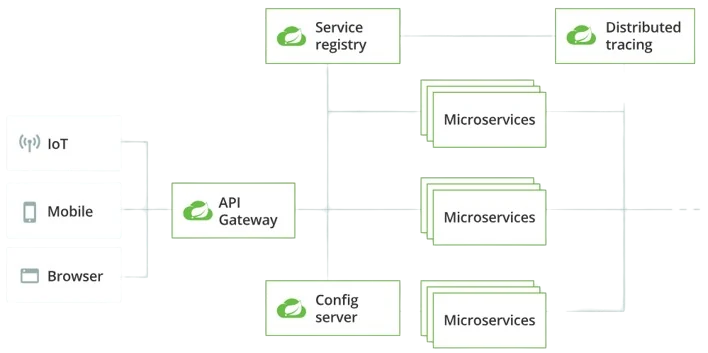
Spring Cloud is a powerful framework for building microservices and distributed systems. It provides a suite of tools for managing the complexity of such systems, including service discovery, configuration management, circuit breakers, and distributed tracing. These features help in creating resilient, scalable, and easily maintainable cloud-native applications.
| Duration | 4 Weeks | Class Hours | 1 hour/day |
| Lab Hours | 1 hour/day | Prerequisite | Knowledge of Spring |
| Certificate | After successful completion of training | Trainer | Industry Experienced Mentor |
| Study Material | Books, Notes and Online Tests | Online Test | Unlimited |
| Project | Yes | Lectures In | English / Hinglish / Hindi |
| Fees | ₹ 25,000/- + 18% GST | Placement Support | No |
| Complimentary | Laptop Bag and T-Shirt | ||
About Spring Cloud
Spring Cloud builds upon the Spring Framework, offering seamless integration with popular cloud platforms and services. It supports the implementation of microservices patterns like API Gateway, centralized configuration, and service mesh, simplifying the management of distributed applications. Spring Cloud's robust ecosystem empowers developers to build flexible and fault-tolerant cloud applications efficiently.
Key Features of Spring Cloud:
Service Discovery
Spring Cloud provides built-in service discovery mechanisms, such as Eureka, to dynamically locate and manage microservices within a distributed system.
Configuration Management
Spring Cloud Config Server offers centralized configuration management, enabling consistent settings across all environments.
Circuit Breaker
Spring Cloud integrates with tools like Hystrix to implement circuit breakers, which help in managing and mitigating failures within a microservices architecture.
API Gateway
Spring Cloud Gateway serves as an API gateway that handles routing, monitoring, and securing of API requests, providing a unified entry point for clients.
Distributed Tracing
Spring Cloud Sleuth facilitates distributed tracing, allowing developers to track and monitor requests as they propagate through a microservices ecosystem.
Complete Spring Cloud Syllabus
14 Modules · 4 Weeks
The syllabus for Spring Cloud covers a comprehensive range of topics essential for mastering microservices architecture using the Spring Cloud framework.
-
- Overview of Cloud Computing
- Microservices Architecture vs. Monolithic Architecture
- Introduction to Spring Cloud
- Benefits of Using Spring Cloud for Microservices
- Setting Up the Development Environment
-
- Introduction to Spring Boot
- Building Microservices with Spring Boot
- Configuring Spring Boot Applications
- Spring Boot Auto-Configuration
- Creating RESTful Services with Spring Boot
-
- What is Service Discovery?
- Introduction to Netflix Eureka
- Setting Up Eureka Server
- Registering Microservices with Eureka
- Service Discovery and Client-Side Load Balancing
- Configuring Eureka Clients
-
- Introduction to Netflix Ribbon
- Ribbon Configuration in Spring Cloud
- Integrating Ribbon with Eureka for Load Balancing
- Customizing Ribbon Load Balancing Strategies
-
- Introduction to API Gateways
- Benefits of Using API Gateways
- Setting Up Spring Cloud Gateway
- Configuring Routes and Predicates
- Implementing Filters and Customizations
- Integrating Gateway with Eureka for Dynamic Routing
-
- Understanding Circuit Breaker Patterns
- Introduction to Resilience4j
- Setting Up Resilience4j in Spring Cloud
- Configuring Circuit Breakers for Microservices
- Fallback Methods and Circuit Breaker States
- Monitoring and Managing Circuit Breakers
-
- Introduction to Centralized Configuration
- Setting Up Spring Cloud Config Server
- Managing Configurations in Git
- Accessing Configurations from Config Server
- Dynamic Configuration Updates with Spring Cloud Bus
-
- Importance of Distributed Tracing in Microservices
- Introduction to Spring Cloud Sleuth
- Setting Up Sleuth for Tracing
- Introduction to Zipkin for Distributed Tracing
- Integrating Spring Cloud Sleuth with Zipkin
- Visualizing Traces in Zipkin Dashboard
-
- Introduction to Event-Driven Microservices
- Overview of Spring Cloud Stream
- Creating Message Producers and Consumers
- Understanding Binders and Channels
- Configuring Messaging Middleware (e.g., RabbitMQ, Kafka)
- Error Handling and Retries in Spring Cloud Stream
-
- Securing Microservices with Spring Security
- OAuth2 and OpenID Connect in Microservices
- Implementing Security with Spring Cloud Security
- Integrating Spring Security with OAuth2 and JWT
- Protecting Microservices with API Gateway Security
-
- Introduction to Application Monitoring
- Using Spring Boot Actuator for Monitoring
- Setting Up Metrics Collection and Dashboards (e.g., Prometheus, Grafana)
- Centralized Logging with ELK Stack (Elasticsearch, Logstash, Kibana)
- Log Aggregation with Spring Cloud Sleuth
-
- Packaging Microservices with Docker
- Container Orchestration with Kubernetes
- Deploying Spring Cloud Applications to Cloud Platforms (e.g., AWS, Azure, Google Cloud)
- Best Practices for Developing and Deploying Spring Cloud Applications
- Handling Failures and Scaling Microservices
-
- Reactive Microservices with Spring WebFlux
- Using Spring Cloud Contract for Consumer-Driven Contract Testing
- Implementing Service Mesh with Istio
- Blue-Green Deployment and Canary Releases
-
- Building a Complete Microservices Application with Spring Cloud
- Integrating Different Spring Cloud Components
- Best Practices and Real-World Use Cases
- Review and Q&A
This syllabus provides a solid foundation in Spring Cloud, enabling developers to build scalable, resilient, and maintainable microservices-based applications.
Why Should a Student or Professional Learn Spring Cloud?
- Cloud-Native Development: Spring Cloud provides a comprehensive suite of tools for building cloud-native applications, enabling seamless deployment and management in various cloud environments.
- Microservices Architecture: Spring Cloud simplifies the development of microservices by offering features such as service discovery, load balancing, and configuration management, crucial for modern distributed systems.
- Resilience and Fault Tolerance: With built-in support for circuit breakers and bulkheads, Spring Cloud helps in building resilient applications that can gracefully handle failures and maintain high availability.
- Ease of Integration: Spring Cloud integrates smoothly with various cloud platforms and services, including AWS, Azure, and Google Cloud, allowing developers to leverage cloud provider capabilities effortlessly.
- Enhanced Productivity: By providing a range of pre-built components and abstractions, Spring Cloud reduces the complexity of developing and managing cloud applications, boosting developer productivity.
Learning Spring Cloud equips students and professionals with the skills needed to design and deploy scalable, resilient cloud-native applications, meeting modern industry standards for cloud development.
Interesting Facts
Spring Cloud is a powerful toolkit for building robust and scalable cloud-native applications. It provides a range of tools to simplify the development and deployment of microservices in a cloud environment. Here are some interesting facts about Spring Cloud:
1. Creation and Development
Origin
Spring Cloud was developed by Pivotal Software and first released in 2014. It was designed to work seamlessly with the Spring Framework, providing additional tools and integrations to support cloud-native application development.
2. Service Discovery
Dynamic Registration
Spring Cloud integrates with service discovery tools like Netflix Eureka and Consul, allowing microservices to dynamically register and discover each other. This ensures that services can find and communicate with each other efficiently in a dynamic cloud environment.
3. Load Balancing
Client-Side Load Balancing
Spring Cloud includes support for client-side load balancing with tools like Netflix Ribbon. This allows applications to distribute requests across multiple instances of a service, enhancing reliability and performance.
4. Circuit Breaker
Fault Tolerance
Spring Cloud integrates with circuit breaker libraries like Hystrix and Resilience4J to handle failures gracefully. This helps maintain application stability and resilience by providing mechanisms to detect and respond to failures in real-time.
5. Configuration Management
Centralized Configuration
Spring Cloud Config provides a centralized configuration server to manage application settings across multiple services. This simplifies configuration management and ensures consistency across the application stack.
6. API Gateway
Routing and Filtering
Spring Cloud Gateway offers a robust solution for routing and filtering API requests. It provides features such as dynamic routing, load balancing, and security to manage and optimize API traffic effectively.
7. Distributed Tracing
Observability
Spring Cloud integrates with distributed tracing tools like Sleuth and Zipkin, enabling developers to trace and monitor requests across microservices. This enhances visibility into system behavior and helps diagnose performance issues.
8. Messaging
Asynchronous Communication
Spring Cloud supports messaging frameworks like RabbitMQ and Kafka for asynchronous communication between microservices. This facilitates decoupled and scalable message-based interactions.
9. Security
Comprehensive Security
Spring Cloud Security extends the security features of Spring Security to microservices, offering support for OAuth2 and JWT for authentication and authorization in a distributed environment.
10. Cloud-Native Integration
Seamless Cloud Integration
Spring Cloud is designed to integrate seamlessly with cloud platforms like AWS, Azure, and Google Cloud. It provides tools and libraries to leverage cloud-native features and services, making it easier to build and deploy applications in the cloud.
Training Program Fee
Get Personalized Career Guidance
Our admissions team specializes in helping students choose the right career path for their goals.