
Machine Learning (ML)
Join our AI and machine learning courses to learn artificial intelligence, explore the future of AI, and understand machine learning applications in data science. Start your AI journey today!
Machine Learning (ML)
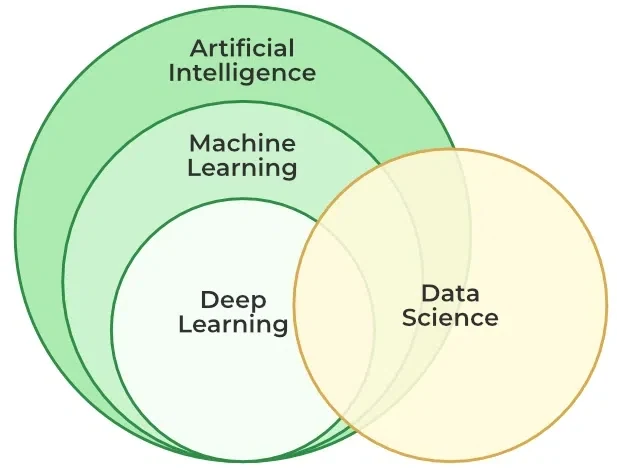
Machine Learning (ML) is a subfield of artificial intelligence (AI) that focuses on the development of algorithms and models that enable computers to learn from and make predictions or decisions based on data. ML techniques are widely used in various applications, ranging from recommendation systems to autonomous vehicles.
| Duration | 6 Weeks | Class Hours | 1 hour/day |
| Lab Hours | 1 hour/day | Prerequisite | Basic understanding of Python and statistics |
| Certificate | After successful completion of training | Trainer | Industry Experienced Mentor |
| Study Material | Books, Notes and Online Tests | Online Test | Unlimited |
| Project | Yes | Lectures In | English / Hinglish / Hindi |
| Fees | Please Call | Placement Support | No |
| Complimentary | Laptop Bag and T-Shirt | ||
About Machine Learning (ML)
Proficiency in ML allows individuals to analyze data, extract meaningful insights, and build predictive models that drive business value. Understanding ML concepts such as supervised learning, unsupervised learning, and reinforcement learning is essential for developing intelligent systems and solving complex problems.
Moreover, ML is continuously evolving, with advancements in deep learning, neural networks, and probabilistic graphical models pushing the boundaries of what's possible. Learning ML opens up exciting career opportunities in fields such as data science, artificial intelligence, and predictive analytics.
Following Key Topics to Cover in Machine Learning-
6 Modules · 6 Weeks
-
- What is Machine Learning?
- Types of Machine Learning: Supervised, Unsupervised, Reinforcement Learning
- Machine Learning Workflow
- Model Evaluation and Validation
-
- Regression
- Classification
- Decision Trees and Random Forests
- Support Vector Machines
-
- Clustering
- Dimensionality Reduction
- Association Rule Learning
- Principal Component Analysis (PCA)
-
- Neural Networks Basics
- Convolutional Neural Networks (CNNs)
- Recurrent Neural Networks (RNNs)
- Generative Adversarial Networks (GANs)
-
- Markov Decision Processes
- Q-Learning and Deep Q-Networks (DQN)
- Policy Gradient Methods
- Actor-Critic Models
-
- Deploying ML Models in Production
- Scalability and Performance Optimization
- Monitoring and Maintenance
- Model Interpretability and Explainability
Mastering Machine Learning concepts and techniques is essential for leveraging the power of data and building intelligent systems that drive innovation and create value. This curriculum covers foundational topics required to understand, implement, and deploy machine learning models effectively. By acquiring these skills, you can unlock new opportunities in data-driven decision-making and problem-solving across various domains.
Why Should a Student or Professional Learn Machine Learning?
- Data Analysis and Insights: Machine Learning enables analysis of large datasets to extract valuable insights and inform decision-making processes.
- Predictive Modeling: ML algorithms can be used to build predictive models that forecast trends, identify patterns, and anticipate future outcomes.
- Automation and Efficiency: ML automates repetitive tasks and processes, leading to increased efficiency and productivity in various industries.
- Future-proofing Career: With the growing demand for ML expertise, learning Machine Learning opens up diverse career opportunities in fields such as data science, artificial intelligence, and predictive analytics.
Whether you're a student passionate about data science or a professional looking to enhance your skills, learning Machine Learning is a strategic investment that equips you with valuable knowledge and capabilities to succeed in the data-driven world of today and tomorrow.
Interesting Facts
Machine Learning (ML) is a subset of Artificial Intelligence (AI) that focuses on building systems that learn and adapt from data. In the IT field, ML is driving innovation and enhancing various applications. Here are some interesting facts about Machine Learning in the IT field:
1. Predictive Analytics
Data-Driven Predictions
Machine Learning models can analyze historical data to make accurate predictions about future trends, helping businesses make informed decisions and forecast outcomes.
2. Personalization
Customized Experiences
ML algorithms are used to personalize user experiences on platforms like e-commerce websites and streaming services by recommending products or content based on user behavior and preferences.
3. Anomaly Detection
Fraud Detection
Machine Learning is employed to detect anomalies in transaction data, helping to identify fraudulent activities and improve security measures in financial services.
4. Natural Language Processing (NLP)
Understanding Human Language
ML techniques are used in NLP to enable machines to understand, interpret, and respond to human language, enhancing applications like chatbots, virtual assistants, and language translation services.
5. Image and Speech Recognition
Advanced Recognition
Machine Learning models are used for image and speech recognition, enabling technologies such as facial recognition systems and voice-activated assistants.
6. Automation of IT Operations
Operational Efficiency
ML can automate routine IT operations tasks, such as monitoring, system maintenance, and incident response, improving efficiency and reducing the workload on IT staff.
7. Predictive Maintenance
Proactive Maintenance
Machine Learning models analyze data from equipment and systems to predict failures and schedule maintenance proactively, reducing downtime and operational costs.
8. Enhanced Cybersecurity
Threat Detection
ML algorithms are used to detect and respond to cybersecurity threats by identifying patterns and anomalies in network traffic and user behavior.
9. Intelligent Data Management
Efficient Data Handling
ML helps in managing and organizing large volumes of data, improving data quality, and facilitating more effective data analysis and retrieval.
10. Adaptive Learning Systems
Continuous Improvement
Machine Learning models can adapt and improve over time as they are exposed to more data, enhancing their accuracy and performance in various applications.
Training Program Fee
Get Personalized Career Guidance
Our admissions team specializes in helping students choose the right career path for their goals.