
Python Internship Program
Master Python through hands-on training, real-world projects, and industry-focused mentorship. Learn Python programming, OOP, databases, APIs, automation, and backend development while building practical applications.
Python Internship
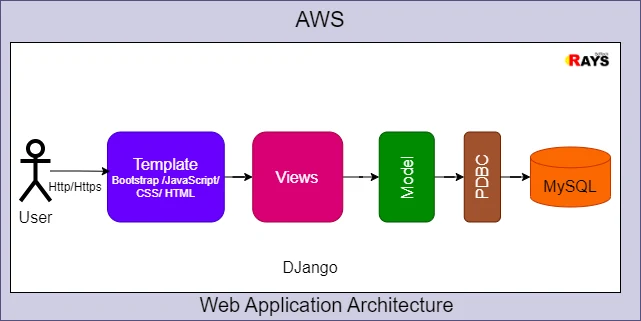
It is a comprehensive Python internship program that covers Core Python, Django, and a web project development using HTML, Bootstrap, Django, MySQL, and deployment on a cloud platform such as AWS. The program is structured to provide a well-rounded learning experience, starting from the basics and progressing to advanced topics and hands-on project work.
| Duration | 3 Months | Class Hours | 1 hour/day |
| Lab Hours | 1 hour/day | Prerequisite | Basic knowledge of programming |
| Certificate | After successful completion of training | Trainer | Industry Experienced Mentor |
| Study Material | Books, Notes and Online Tests | Online Test | Unlimited |
| Project | Yes | Lectures In | English / Hinglish / Hindi |
| Fees |
₹ 15,000/- + 18% GST Add-on: DevOps (AWS/Docker/Jenkins) — ₹5,000/- + 18% GST |
Placement Support | Access our job portal, regularly updated with the latest openings from leading companies in the software industry. |
| Weekend Class |
1st Saturday - 6 hours (Theory +
Practical) 2nd Saturday - 6 hours (Theory + Practical) |
Complimentary | Bag and T-Shirt |
What is the Python Internship?
Our Python Internship is an intensive, hands-on program designed to transform you into a job-ready Python Developer in 3 months. You’ll master Python programming, Django/Flask, REST APIs, databases and real-world application development while building production-ready projects under industry-expert mentorship.
Unlike traditional courses, this internship immerses you in real project environments — writing clean code, developing APIs, working with databases, collaborating in teams, participating in code reviews, and deploying live applications, giving you practical experience similar to working in a professional tech company.
Hands-on Projects
Build 5+ Python & Django apps including REST APIs and data-driven automation scripts
1-on-1 Expert Mentorship
Guided by developers with 5+ years of real industry experience
Placement Support
Access our job portal, regularly updated with the latest openings from leading companies in the software industry.
Industry Certificate
Recognized certification to boost your GitHub profile & LinkedIn credibility
Agile Team Experience
Work in scrum teams with daily stand-ups, sprints & pull request reviews
Live Deployment
Deploy apps on AWS EC2 using Docker & Jenkins CI/CD — shareable links for your portfolio
Complete Python Internship Syllabus
3 Modules · 10+ Weeks · 250+ Hours of Learning
-
Week 1: Python Basics
- Overview of Python
- Setting up the development environment
- Variables, Data Types, and Operators
- Control Flow Statements (if, for, while)
- Functions and Modules
-
Week 2: Data Structures and Libraries
- Lists, Tuples, Dictionaries, and Sets
- String Manipulation
- File Handling
- Introduction to Libraries: NumPy, Pandas
-
Week 3: Object-Oriented Programming (OOP)
- Classes and Objects
- Inheritance and Polymorphism
- Encapsulation and Abstraction
- Exception Handling
-
Week 4: Advanced Python Concepts
- List Comprehensions
- Lambda Functions
- Decorators and Generators
- Working with JSON and CSV files
-
Week 5: Introduction to Django
- Setting up Django environment
- Understanding Django project structure
- Creating a simple Django application
- Models, Views, and Templates (MVT pattern)
-
Week 6: Working with Django
- Forms and Form Handling
- URL Routing and Requests
- Database Migrations
- Admin Interface
-
Week 7: Django REST Framework
- Introduction to REST APIs
- Setting up Django REST Framework
- Creating Serializers
- Building API Views and Viewsets
-
Week 8: Advanced Django Topics
- Authentication and Authorization
- Middleware
- Django Signals
- Optimizing Queries and Performance
-
Week 9: Project Planning and Setup
- Project Requirement Analysis
- Setting up the Project Repository (Git)
- Designing the Database Schema
- Creating Initial Django Models and Migrations
-
Week 10: Project Development
- Developing Core Features using Django
- Implementing REST APIs
- Integrating Frontend (Optional)
- Writing Unit Tests
-
Week 11: Containerization with Docker
- Introduction to Docker
- Creating Dockerfiles for Django Application
- Building and Running Docker Containers
- Docker Compose for Multi-Container Applications
-
Week 12: Deployment and CI/CD with Jenkins and
AWS
- Introduction to AWS (EC2, S3, RDS)
- Setting up an AWS EC2 Instance
- Deploying Docker Containers to AWS
- Setting up Jenkins for CI/CD
- Automating Deployment Pipelines with Jenkins
-
Project: Full Stack Application Development
and Deployment
- Objective: Develop a full-stack application using Django for the backend and deploy it on AWS using Docker and Jenkins.
-
Steps:
- Requirement Analysis and Project Planning
- Backend Development with Django
- API Development with Django REST Framework
- Containerization with Docker
- Deployment on AWS EC2
- Continuous Integration and Continuous Deployment (CI/CD) with Jenkins
-
Outcome
- By the end of this internship, participants will have hands-on experience with Python programming, Django web development, REST API creation, Docker containerization, and deployment using AWS and Jenkins.
Why is a Python Internship necessary?
- Strong Programming Foundation: Build a strong foundation in Python programming, object-oriented programming, data structures, and modern development practices.
- Web Development Skills: Learn Django and Django REST Framework to develop scalable web applications and REST APIs.
- Industry-Ready Development: Gain practical experience with Git, Docker, AWS, Jenkins, CI/CD, testing, and real-world project development.
- Hands-on Project Experience: Work on a complete full-stack application and understand the complete development, containerization, and deployment lifecycle.
Whether you're looking to kickstart your career in Python development or seeking to advance your skills in backend and full-stack development, participating in a Python internship can provide valuable hands-on experience and practical knowledge to build a successful career in technology.
Why Python Dominates Tech
Powerful, versatile, and one of the most widely used programming languages in the world.
Python Is One of the World's Most Popular Languages
Python consistently ranks among the most popular programming languages worldwide, powering web applications, automation, data science, artificial intelligence, and machine learning.
Python Powers AI & Machine Learning
Python is widely used for artificial intelligence and machine learning with powerful libraries such as TensorFlow, PyTorch, Scikit-learn, and Pandas. It has become a go-to language for building intelligent applications.
Automate Repetitive Tasks with Python
Python makes automation simple. Developers use it to automate reports, file processing, web scraping, testing, data processing, API integrations, and everyday business workflows.
Build Powerful Web Applications
Python is used to build scalable web applications and APIs with frameworks such as Django, Flask, and FastAPI. From startups to enterprise systems, Python can power complete backend solutions.
Python Is a Data Science Powerhouse
Python provides a rich ecosystem for working with data using libraries such as NumPy, Pandas, Matplotlib, and Seaborn. Developers and analysts use Python to transform raw data into meaningful insights and visualizations.
Python Skills Open Multiple Career Paths
Learning Python can lead to careers in software development, backend development, automation, data analytics, AI, machine learning, and data science. One language can unlock opportunities across multiple technology domains.
Learn Python by Building Real Projects
At RaysEdTech, students learn Python through hands-on projects, practical coding exercises, real-world problem solving, and industry-focused mentorship designed to build job-ready skills.
Internship Program Fee
Add-on: DevOps (AWS/Docker/Jenkins) — ₹5,000/- + 18% GST
Enroll Now Book Free DemoGet Personalized Career Guidance
Our admissions team specializes in helping students choose the right career path for their goals.